For more than two decades, the internet has been flooded with claims that websites have become a commodity. Anyone can spin one up in minutes. WordPress has been free for years, hosting costs pennies per day, and AI tools can now generate entire websites with design, copy, and SEO baked in.
At a glance, it’s hard to argue. The technology is ubiquitous, the tools are easy, and the supply of web designers has exploded. But this popular claim, while economically half-right, misses something vital: the philosophy of trust. Because in a world where everyone can build a website, the question is no longer “Do you have a website?” — it’s “Do people believe what they see when they visit it?”
1. How the Commodity Narrative Emerged
Economists define commoditization as what happens when products that were once unique become interchangeable and compete primarily on price. The web industry fits that description on the surface.
Standardized tools, low barriers to entry, perceived sameness, and AI automation have made design and development nearly formulaic. From this perspective, websites appear to have followed the same trajectory as electricity, steel, or basic cloud storage — standardized, cheap, and interchangeable.
2. Why That View Is Only Half Right
The argument that “websites are a commodity” confuses the technical layer of a website with its strategic layer. Yes, the means of production have been commoditized — code, templates, hosting, CMS platforms. But the outcomes that websites create — trust, differentiation, conversion — have not.
A website’s economic and philosophical value lies not in its pixels but in its perception. It’s the difference between a brochure and a brand, between something that merely exists online and something that moves people.
3. The Hidden Currency: Perceived Trust
When a potential customer lands on your website, the first question in their mind isn’t “Is this mobile responsive?” It’s “Can I trust this company?”
Trust is the new scarcity. And in markets saturated with identical products and interchangeable service providers, trust becomes the differentiator that commands economic value.
Studies back this up: Stanford’s Web Credibility Project found that 75% of users judge a company’s credibility by its website design. Research on cognitive fluency shows that people are more likely to believe information that’s easy to visually process — clarity, spacing, and aesthetics literally make your message more credible. Design isn’t decoration. It’s a language of trust.
4. The Philosophy of Aesthetic Credibility
Aesthetics and trust have always been intertwined. Philosophers like Kant argued that beauty evokes a sense of harmony and order — qualities our minds associate with truth and goodness.
In business, that same principle applies subconsciously. A company whose website feels deliberate, balanced, and consistent signals integrity. It communicates, “We care. We pay attention. You’re safe here.”
That’s why great design is not vanity — it’s a moral and economic statement. It tells the world that your business values coherence and quality, not shortcuts.
5. Uniqueness as Proof of Seriousness
When everything online starts to look the same — the same template, same layout, same language — sameness itself becomes suspicious.
A unique design, authentic messaging, and visual refinement signal effort. And effort, in behavioral economics, is a costly signal — something that proves commitment precisely because it wasn’t the easiest option.
Visitors may not consciously articulate it, but they feel it: “If this company invests in its website, it probably invests in me as a customer.”
This is why cookie-cutter “canned” websites struggle to earn trust even when they’re functional. They feel generic, and generic feels disposable.
If your website looks like an afterthought — a cheap, do-it-yourself imitation of everything else online — you are sending a message far louder than you realize.
You’re signaling that detail doesn’t matter, that precision is optional, that competence is negotiable.
And, perhaps most damaging of all, you’re suggesting that you don’t truly value your clients — that they’re just another entry on the bottom line rather than partners in the enduring human practice of trading value for value in the marketplace.
6. The Apple Lesson
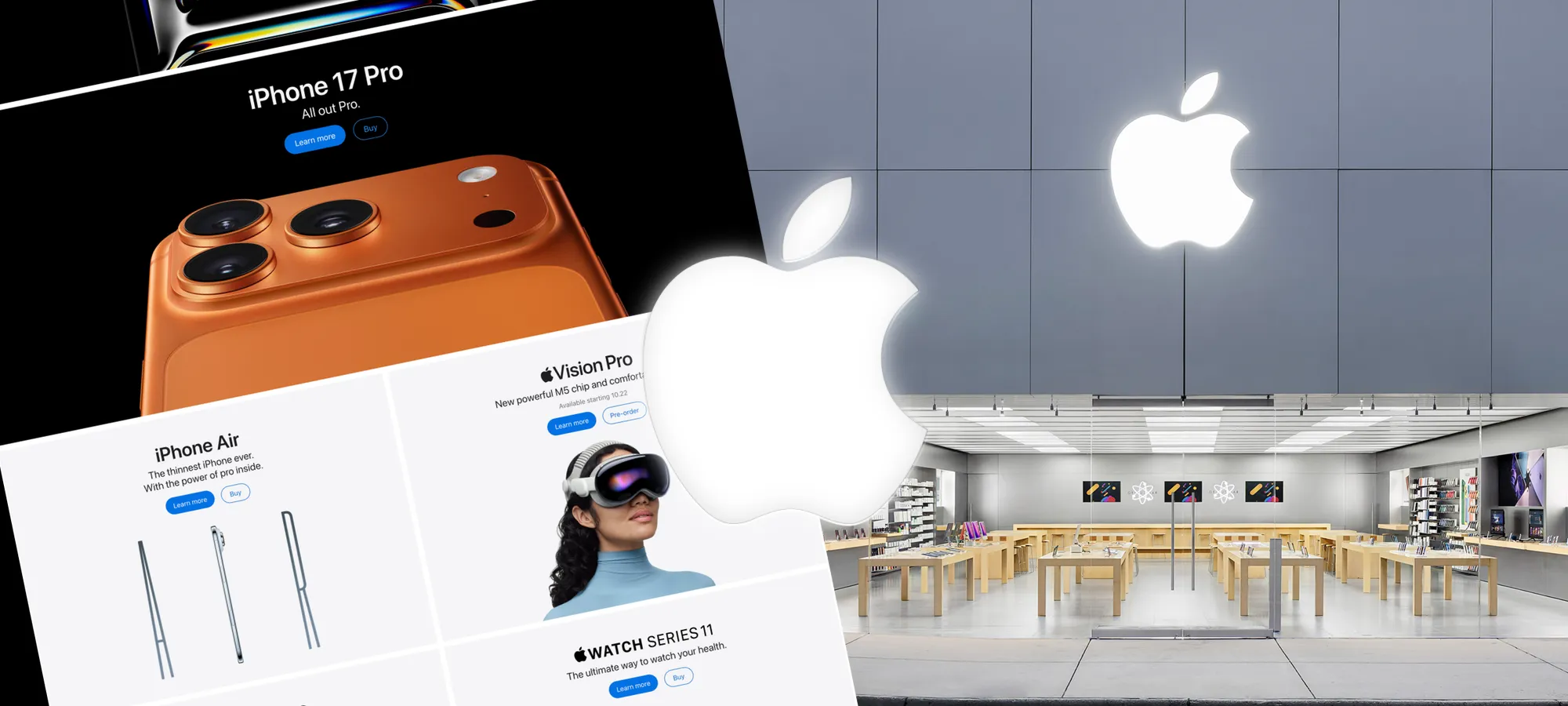
Take Apple as the obvious counterexample. No one ever accused Apple of treating its website like a commodity.
For decades, WordPress has been free, and hosting nearly free. But Apple still invests millions annually to make its online experience an extension of its philosophy: simplicity, clarity, emotion, precision.
Apple doesn’t view its website as a cost center — it views it as a stage for belief formation. Every pixel reinforces trust in the brand. Every image, word, and animation is designed to make you feel that Apple products are worth their premium. That’s the opposite of commodity thinking. That’s strategic storytelling through design.
7. Economic Reality: Trust Commands Margin
From an economic standpoint, trust is not just a feeling — it’s a form of capital. A trusted brand closes sales faster, attracts higher-quality clients, and withstands price competition. When a prospect believes your company is competent and credible, price becomes secondary. When they don’t trust you, no discount feels low enough.
8. The Philosophical Frame
At its core, this debate isn’t about technology. It’s about meaning.
The technician says: “Websites are easy now — anyone can make one.”
The strategist says: “Yes, but not everyone can make one people trust.”
The first sees a website as code. The second sees it as conversation.
The first sells a structure. The second sells a story.
As philosophers of design might put it: the difference between commodity and craft is intention. A commodity exists to fill space; a crafted design exists to express truth.
9. The Build Platform Perspective
For businesses entering competitive markets — trades, health, professional services, coaching — a website isn’t just a digital brochure. It’s a trust-building engine.
At Build Platform, we approach websites not as one-off designs but as pre-populated credibility systems — SEO-rich, visually distinctive, and tailored to the psychology of specific industries. The value isn’t in the template; it’s in the strategic intelligence behind it. That’s what transforms a “commodity website” into a business asset that earns belief.
10. Conclusion: The Real Commodity Is Sameness
It’s true that website creation tools have become cheap, and that the act of publishing online is no longer scarce. But trust — the belief that a business is competent, stable, and real — remains rare, valuable, and hard-earned.
A template can be replicated. Authenticity cannot. And that’s why great companies — from Apple to the smallest independent tradesperson — still invest deeply in design.
Because when every website looks the same, uniqueness isn’t indulgent — it’s evidence of care. And care, expressed visually, is the root of trust.
Websites may be cheap. But trust never has been — and never will be.